

Bee Balm
Powerful Medicine and Flavors.

North America has its own native version of oregano: Monarda fistulosa. Like most other things here, it’s much larger than the true oregano, and therefore a lot easier to harvest in quantity. Unlike oregano, its aromatic potency remains during flowering, with the blooms contributing significantly to the power.
In her venerable tome, A Modern Herbal, Mrs. M. Grieve crowned a Monarda species as the single significant North American source of thymol, which has long been recognized for its antiseptic and preservative benefits. Thymol and carvacrol are prominent contributors to the oregano aroma which has been sought for millenia for culinary, medicinal and cleansing purposes. One wonders if Bee Balm wouldn’t have been the weed for purging people and sacred spaces of Biblical times if it had been available, because it’s stronger than the hyssop and oregano candidates for that job. Instead, it has grown plentifully but in relative obscurity in the new world, with only a scant minority of people quietly using the plant for major medicine. And they have stories. People who lived near the earliest immigrant communities of North America heard about bee balm’s medicine and leaked the good news to other herbalists. Two of the more well read leakers are Michael Moore and Matthew Wood, and their books can be found below, “Where We Dig”. Monarda species have spread to Northern Europe, Austria and Bulgaria and some other places for study by our pharmacognosy friends, and for thymol production, so many far flung readers of weedom should not feel left out. There are from 12 to 25 species within the Monarda genus, (depending on who you ask), which exhibit a variety of flavors depending on the species and the area where they are grown.
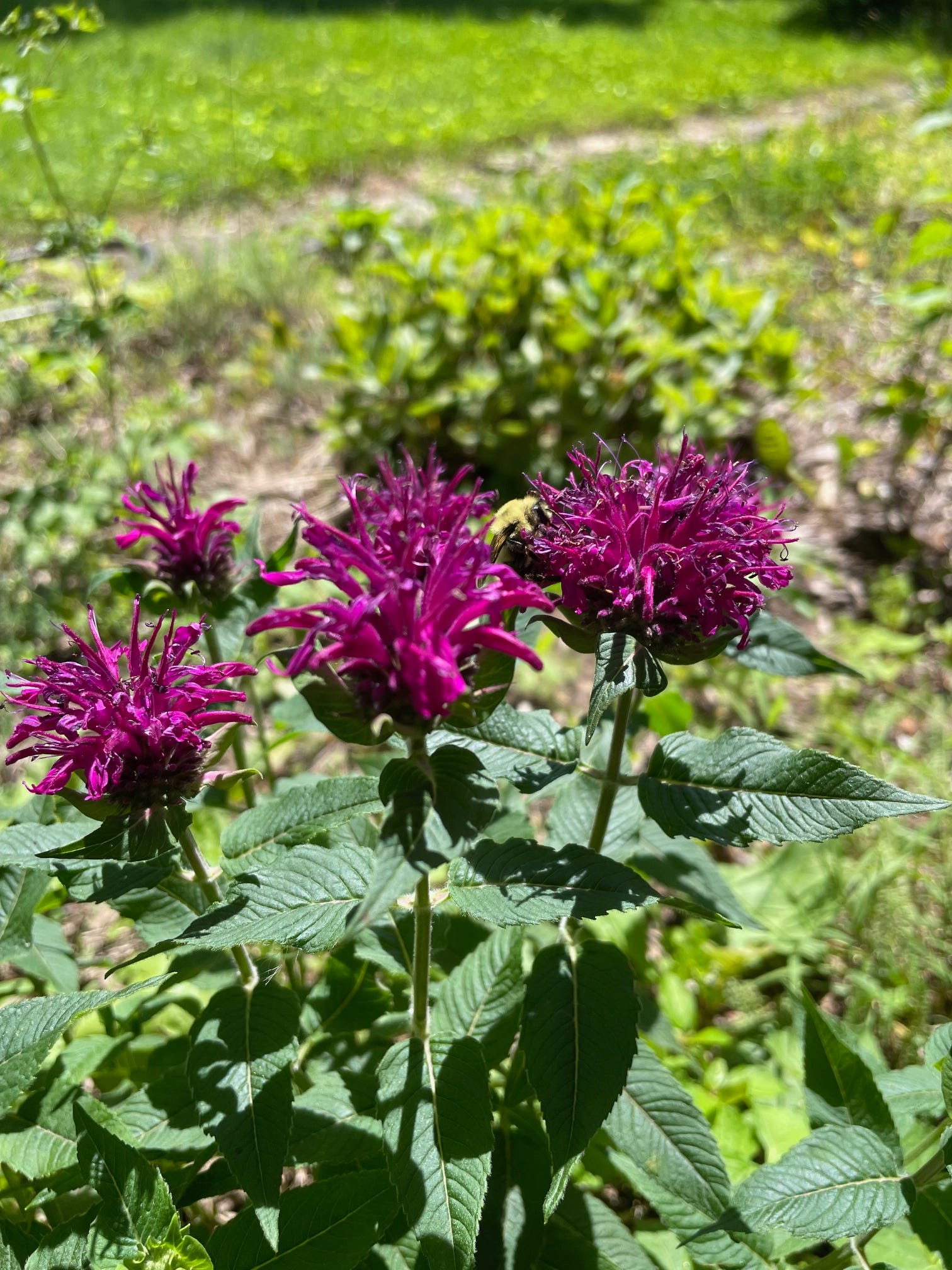
As a proper member of the mint family, bee balm has an unstable collection of common names, such as wild bergamot, horse mint, oswego tea (usually from Monarda didyma, or scarlet bee balm) as well as formal names. It is able to hybridize, producing such products as Monarda media, a cross of Monarda fistulosa and Monarda didyma, and it’s able to spread by both seed and by rhizome. M. media, and M. didyma, (below) have grown in the past at weedom, but our crop for the last few years has been Monarda fistulosa, which has claimed significant territory near our walls of pole beans, where the monarch butterflies have been observed to fly united. Guess they like our weeds?
Sam Thayer, (in Field Guide to Edible Wild Plants) divides the common names, using ‘horsemint’ to describe the Monarda species which have stacked whorls of blooms at the apex of the branches, (e.g., Monarda punctata and Monarda citriodora). He uses ‘wild bergamot’ to describe those which have a single blooming head atop each stem, such as Monarda fistulosa amd monarda didyma. This seems orderly, so we will go with it. All four of these species have culinary and medicinal use, and share numerous constituents, though in varying proportions.
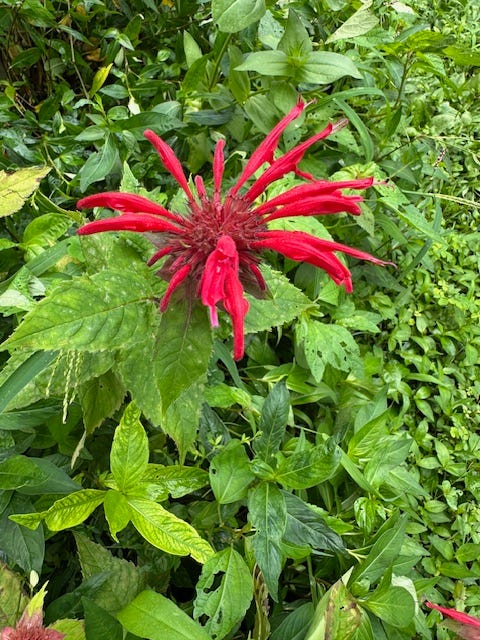
Monarda didyma has an aroma leaning toward citrus, which people likened to bergamot orange. It was consumed as a tea, by members of Oswego river tribe residing in NY state. This native remedy, which alleviated fevers and upset stomach eventually made its way to Europe, where the plant acquired its Linnean genus name (after a Spanish botanist), and a species name referring to the 2 anthers in each flower. Monarda didyma remains the preferred species used by Cherokee herbalists in present times.
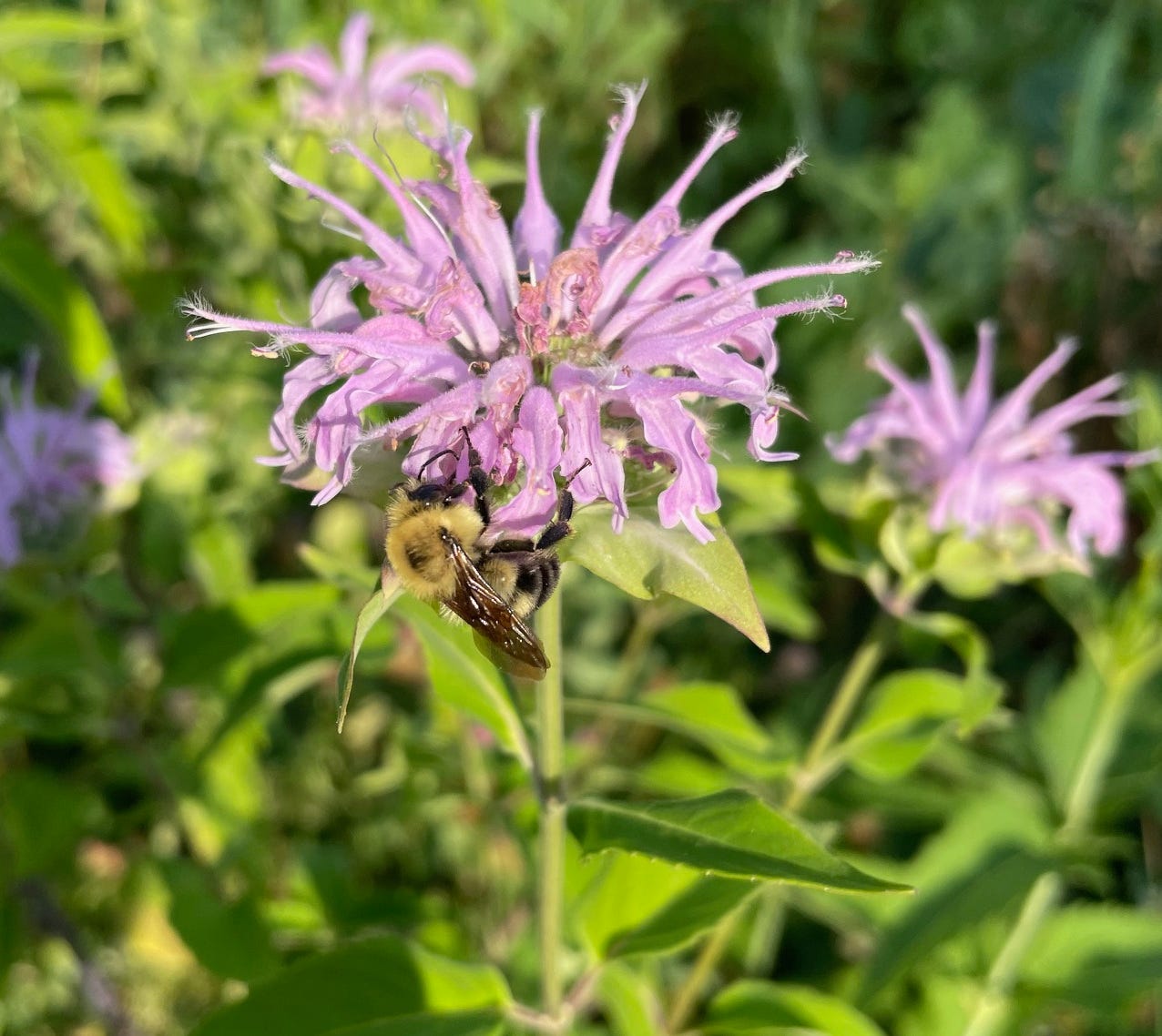
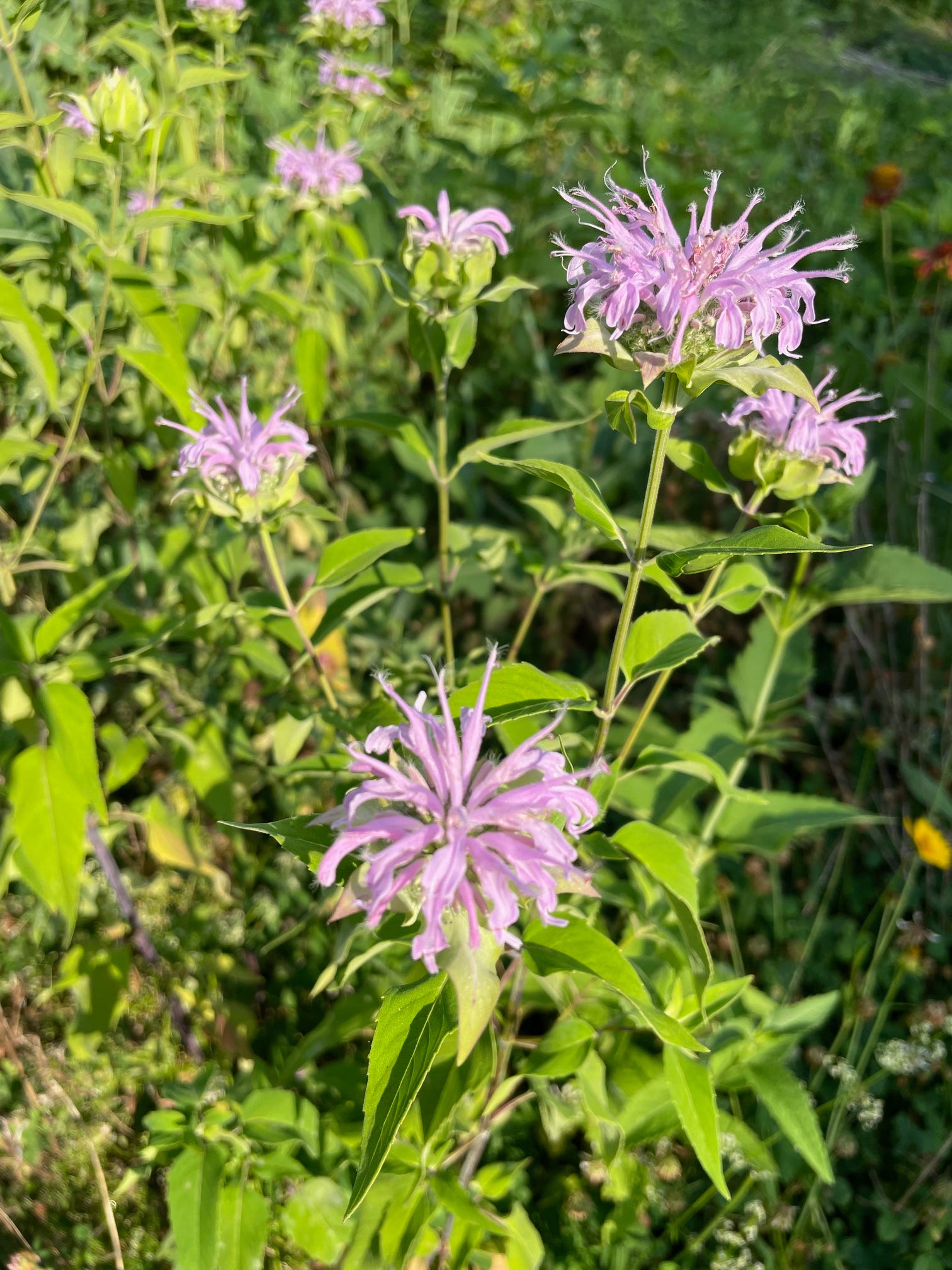
These perennial plants occupy USDA hardiness zones 3-9, and are widely dispersed throughout North America. The plant seen at the top, is Monarda fistulosa, a strongly aromatic plant with pink flowers that some interpret as a light purple. It has classic square stems which are hollow, and from which leaves emerge oppositely, in alternating directions along the the stem. This plant branches profusely at the leaf axils and each branch produces a single cluster of blooms at the top. In this exceptional year for our weeds, many of the bee balm plants have reached 6 feet, (almost 2 meters) in height. Normally they top out at about 4 feet. In the rainy weather they’re spreading by rhizomes more quickly, but they’re are also more affected by the powdery mildew that so often plagues this genus of plants. Monarda species prefer meadows at the edges of a tree line, so as to enjoy partial shade and sufficient moisture. Ours are likely getting more sun than is ideal, and their leaves are a bit lighter shade of green, with the bottom being a bit more silvery than the top.
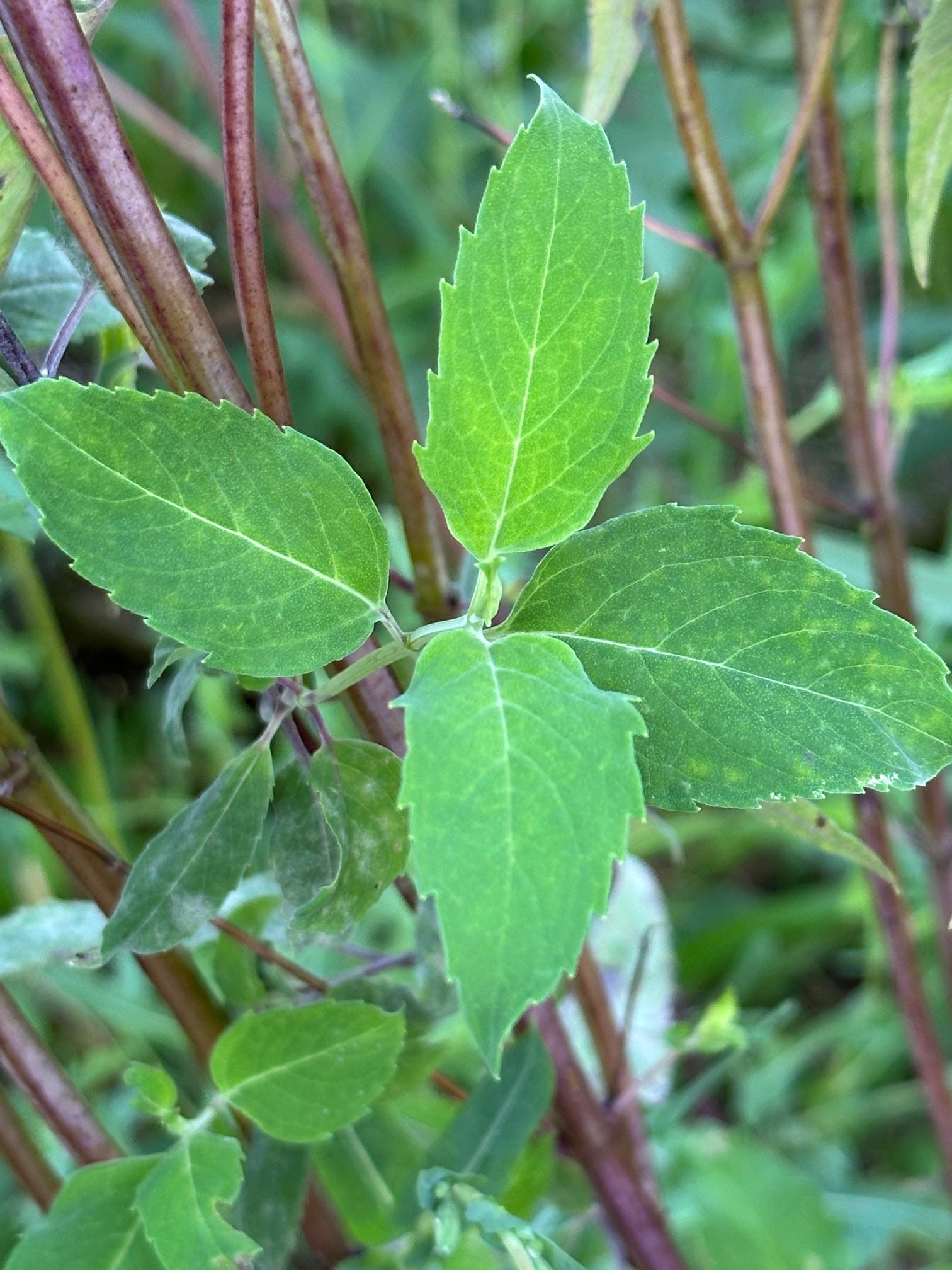
Mature, elliptical leaves are about 3-4 inches (8-10cm) long, but may reach up to twice that length., with pinnate vein arrangement. Small teeth punctuate the leaf margins. Extremely fine, short hairs are on the upper stems, the leaf petioles and the leaves themselves. Leaf petioles may reach a third of the leaf length, but upper leaves may be sessile - attached to the stem.
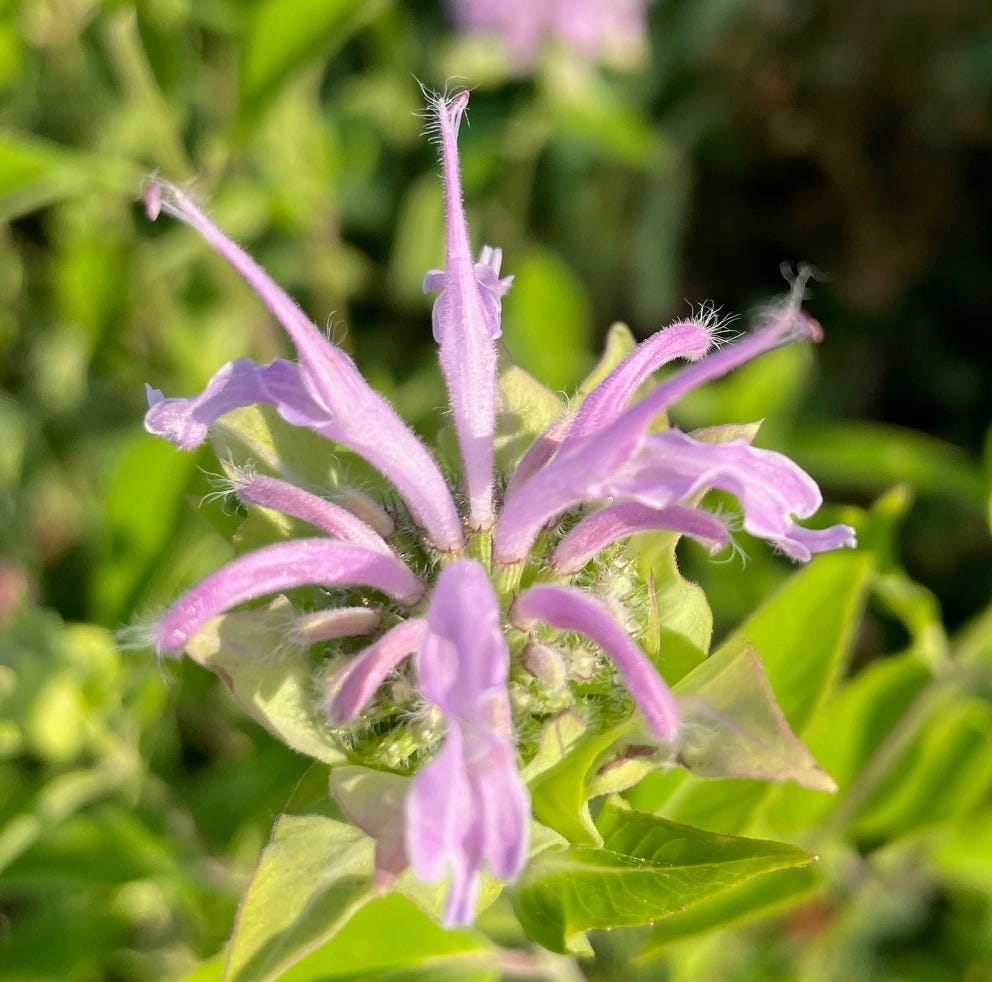
Blooms of Monarda fistulosa have 2 lips, a narrow spur above and a broad lip below. Flowers are self fertile, with 2 anthers above and a generous nectar repository to draw bees in below. A lighter colored array of bracts surrounds the single flower head. Blooms appear from June to September, and are usually the above pinkish shade, but may also be lighter to white.
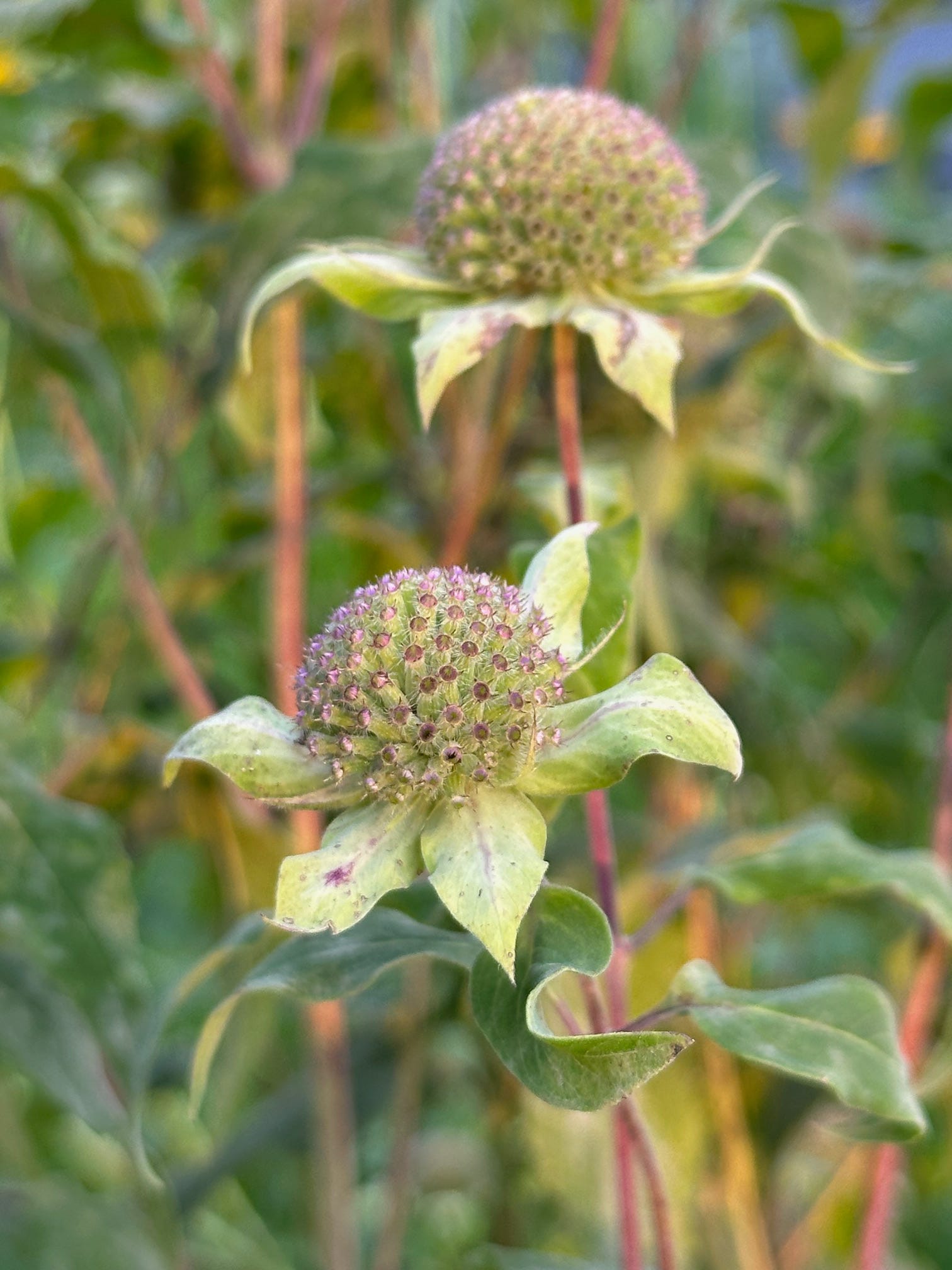
Our pharmacognosy friends have noted a variability in proportion among the essential oils found even within a single species of Monarda. The growing conditions and certainly distillation conditions exert influence on the secondary metabolites of these plants. However they do have many common constituents among their aromatic essential oils. Herbalists such as Michael Moore have noted that more southerly plants tend to have a sweeter array of oils, and the more northerly plants trend towards the spicier and more pungent. Monarda citriodora occupies the southwest U.S. and Northern Mexico, and it’s aroma is quite sweet and lemony. Our Monarda fistulosa, on the other hand is funky oregano, heavy duty, with perhaps a tinge of geraniol aroma. The thymol and carvacrol are strong in the bee balm of weedom, which lends antimicrobial action that is good for poulticing wounds and burns. While some varieties of Monarda have camphoraceous components, these are not prominent in our plants. We would lean towards topical use, and sparing spice use of our potent plants. However it is a candidate for mouth rinses for gingivitis, a scalp treatment for seborrhea and any fungal issues. The plant (particularly flowers) can be extracted into honey and used to address coughs and sore throat in the winter directly as a syrup, or stirred into hot water and consumed as tea. An aqueous infusion is a mouthwash from the garden, to address inflammations of the gums or to assist with thrush (candida infection). Some herbalists suggest a cold infusion of Monarda fistulosa as a douche for vaginal yeast. Many of the species of Bee Balm can act to stimulate menstuation, with some (ours, for example) being stronger than others, therefore they should not be used as medicine internally or vaginally during pregnancy.
Something to bear in mind is that our bee balm, M. fistulosa yields a higher percentage of essential oils than many other members of the mint family: from 2.6 to 4.8 percent of dry weight, with thymol often predominating. It’s a more potent plant for thymol production than most, and it retains a good yield of the compounds of interest through more of its life cycle. For this reason, it’s a great addition to medicinal gardens.
The most prominent constituents, cymene, thymol, thymoquinone and carvacrol are potent antimicrobials with significant activity against major food borne strains of bacteria such as E. coli, Listeria monocytogenes, Staph aureus, etc. While much of the activity of our bee balm lies with the volatile essential oils, this herb contains a generous amounts of polyphenols including rosemarinic acid and apigenin, which might contribute to its calming properties. Some other compounds of significance are flavonoids linarin, prunin and didymin, ther latter of which is generating interest for addressing neuroblastoma and fatty liver disease, while the first 2 are also under study for an array of activities from antidiabetic to cancer inhibition.
Herbalists describe Monarda species functionally as warming, drying, pungent, and dispersive of stagnation. When used to address fevers, it is allocated towards those patients with cold clammy skin. The flowers are seen as the most potent diaphoretic. It is traditionally applied as a spit poultice to inflamed or burned wounds, once the heat had dissipated. Monarda addresses stuck mucus, and has been used as a carminative to stimulate digestion, and even to clear the gall bladder. The steam from a hot infusion can be breathed to open congestion in the sinuses and the lungs. Monarda tea has also been used to alleviate inflammations of the bladder whether from infection or irritation, but is not suggested for kidney infections, which require more immediate intervention. Consider adding mallow root to Monarda when addressing bladder ailments or wound care. Matthew Wood has reported successes treating both tinnitus and Meniere’s disease using a tincture of Monarda, which he, like the earliest immigrants, calls “sweet leaf”.
This is a lower dose herb, because of its strength, so that 2-6 grams total daily of dried plant material is sufficient internally or in an infusion. Divide this over 3 or 4 doses, which would be 0.5 to 1.5 grams per dose. A tincture of dried plant material in 40% ethanol, in a 1:5 ratio can be dosed 2-4 ml, 3 times per day. Some herbalists recommend less of the tincture. Monarda is carminative, and diarrhea is a possibility with excess doses. If you’re distilling this plant for essential oil, that product would have to be diluted to 1 percent or lower in a carrier oil before using topically.
For cooking, consider using Monarda fistulosa wherever you’d use oregano (but use less), and Monarda didyma wherever the orange zest might go. For any other species, crush the leaf and follow the dictates of your nose.
Consider weighing in with your thoughts on this medicinal weed, and which butterflies and bees you’ve seen on the Monarda in your life.

Where We Dig
1. Ghosh M, Schepetkin IA, Özek G, et al. Essential Oils from Monarda fistulosa: Chemical Composition and Activation of Transient Receptor Potential A1 (TRPA1) Channels. Molecules. 2020;25(21):4873. doi:10.3390/molecules25214873
2. Gontar Ł, Geszprych A, Sitarek-Andrzejczyk M, Osińska E. Influence of Plant Phenology on Chemical Composition of Monarda fistulosa L. Organs and their Bioactive Properties. Plant Foods Hum Nutr. 2024;79(4):920-925. doi:10.1007/s11130-024-01238-y
3. Grieve M. Modern Herbal. Echo Point Books & Media, LLC.; 2015. https://openlibrary.org/books/OL36722889M/Modern_Herbal
4. Jordan D. Eat the Weeds: A Forager’s Guide to Identifying and Harvesting 274 Wild Foods. Adventure Publications; 2023.
5. Lawson SK, Satyal P, Setzer WN. The Volatile Phytochemistry of Monarda Species Growing in South Alabama. Plants. 2021;10(3):482. doi:10.3390/plants10030482
6. Lawson SK, Satyal P, Setzer WN. The Volatile Phytochemistry of Monarda Species Growing in South Alabama. Plants (Basel). 2021;10(3):482. doi:10.3390/plants10030482
7. Moore M. Medicinal Plants of the Mountain West. 1st rev. and expanded ed. Museum of New Mexico Press; 2003.
8. Wood M. The Book of Herbal Wisdom - Using Plants as Medicine. North Atlantic Books; Distributed to the trade by Publishers Group West; 1997. https://openlibrary.org/books/OL1009748M/The_book_of_herbal_wisdom
9. Wood M. The Earthwise Herbal. A Complete Guide to NEw World Medicinal Plants. North Atlantic Books; 2009. https://openlibrary.org/books/OL22552057M/The_earthwise_herbal.
10. Monarda fistulosa (Appalachian Bergamot, Bee Balm, Eastern Bergamot, Wild Bergamot) | North Carolina Extension Gardener Plant Toolbox. Accessed July 29, 2025. https://plants.ces.ncsu.edu/plants/monarda-fistulosa/
11. Reflections in Nature: Oswego tea has regional roots. sungazette.com. Accessed July 30, 2025. https://www.sungazette.com/news/outdoors/2021/07/reflections-in-nature-oswego-tea-has-regional-roots/
12. A Review on Pharmacological Activity of Monarda fistulosa L. ResearchGate. Published online April 28, 2025. doi:10.54250/ijls.v4i2.142
damn, you're a guitar player and you know all this other stuff!
I grew Monarda punctata one year, though it didn't come back - too much mulch, maybe? My main memory of it is that carpenter bees really loved it.
This year I got some Monarda didyma, and then once it bloomed I learned that there are hummingbird moths in my area!