Wild Winter Weeds
a Win-tour of weedom

After years of communing with the weeds, even the little ones have become recognizable enough that we can find some food through most of the frigid months. Snow is a welcome friend that preserves the baby greens through severe cold. Those who live in the coldest and driest regions might have a longer period of reliance upon preserved food or root vegetables, but the ability to identify the tiny green volunteers of winter will extend your harvesting season no matter what.
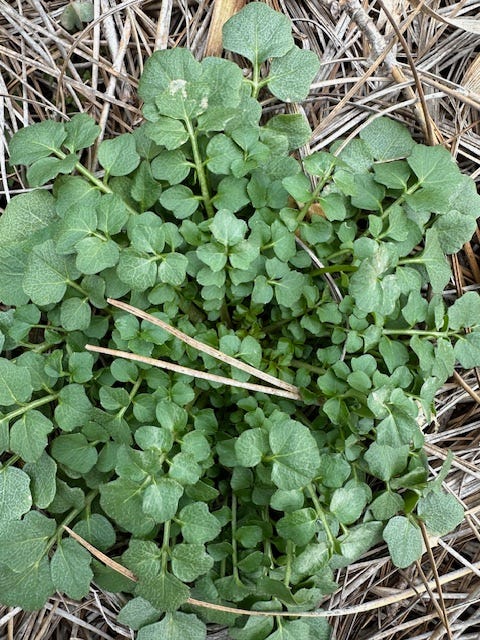
Your time invested outdoors will gradually give you the ability and confidence to identify and munch this food most or all of winter. Don’t be in a hurry. Even you gain full knowledge of just 1 or 2 weeds a year, you’ll gradually be able to gather winter greenery, and enhance your nutritional status in good times and in bad. Habitual foragers gather these plants because incorporating the nutritious variety of wild food in their diet makes them feel better. The mustard family Brassicaceae, will provide a significant portion of your cold weather greens. The pungent little rosettes will confirm their identity to your nose, and (like collards and kale) will offer their best flavor during cold weather. Look for this bittercress (Cardamine hirsuta) , below, and wintercress, (Barbarea vulgaris) and any tasty wild mustards of your area.
Some of our readers haven’t gotten their own piece of land yet, and some might not choose to do so. But this isn’t a limitation. Find a friend or relative with a patch of land that’s not being sprayed with herbicides all the time. Do they need help weeding a garden or getting it ready for spring? Free food! The upper age group of our population is most likely to have more land than they can maintain to their own satisfaction. Building relationships with this generation can bring you more greens than you can eat. Some of them know the weeds well and will help you learn the identities, even if they don’t know the full utility of each plant. On public lands, you might obtain permission to harvest whatever is considered invasive, and then some. There are plenty of non land-owning herbalists who have been able to legitimately gather a good harvest year round.
Many foraging sources will caution you that gathering near farms, ditches, roads, etc. will cause you to curl up and die. Just remember that our food comes from places which are called farms, and are accessed by roads and irrigated via ditches. Don’t lose your mind by fearing less than pristine wild food, because none of the food we eat is totally ‘clean’. Much of organic certification is accorded to hydroponics, which are artificially grown using imported, processed (not natural) nutrients. The best protection from toxicity is from avoiding really nasty runoff areas, or raw sewage drains, gas station lots, and by harvesting a variety of food from a variety of locations over time. Learn from the rats and the wildlife. That’s what they do. A good bit of malnutrition and poor health in our population is caused by the fear of eating less than perfect food. Get used to sharing your greenery with the wormie looking insect larvae. If your leaves are a little bug eaten, that means less or no insecticides, which is great. Flick off the extra protein, and wash off the bug poop (a.k.a. frass) . Cooking will allow you to tolerate some of these imperfections more easily.
Some people like to eat the extra protein, but mostly I’m not a fan.
Links in this post will lead you to detailed weedom info about most of the plants should you want a review, or for our new readers. You could go at this all day. :-D
Despite the early cold snap at weedom, a surprising array of greens are still showing themselves in mid January, a few of which actually taste great.
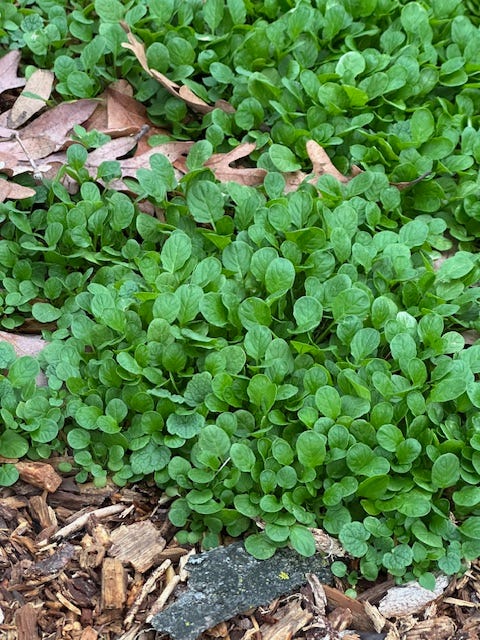
Shepherd’s purse microgreens remain in abundance. Garlic lovers especially can dig into this greenery for both food and medicine. This weed supports the action of blood clotting nutritionally via vitamin K, and as an oxytocic to constrict smooth muscle. At this size, the shepherd’s purse is fantastic, raw or cooked.
A surprising amount of catnip is still sprouting to a good size, near the compost heap, and also out in the open. With this plant is a good deal of ground ivy and Gallium mollugo. Catnip is dead center, the semicircular leaves above are ground ivy and the radially arranged leaves belong to the Gallium mollugo, a.k.a. false baby’s breath. In the archives are 3 articles extolling the many virtues of catnip, which is for people too.
Hiking out in the fields, we have been spotting more than the usual amount of yarrow, another hemostatic weed which works in an astringent way to stop bleeding. It’s complementary and additive to shepherds purse for hemostasis. The roots are anaesthetic. Plenty of anti-microbial and anti-inflammatory activity add to the the wound healing power of this medicinal weed.
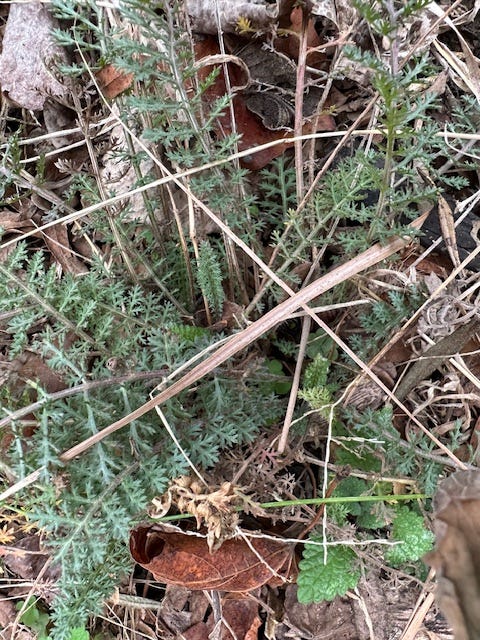
Ground ivy is a digestive bitter than can help you process the heavy food of winter. Chewing a little bit of it before a meal will stimulate your digestive juices. This herb is medicine, with a zillion components that are best in lower quantities. It is added to alcoholic beverages for flavor, and was a beer additive and preservative before hops became popular in Europe.
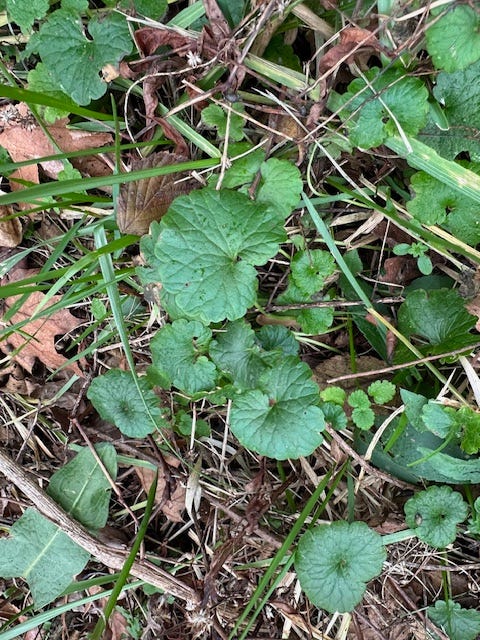
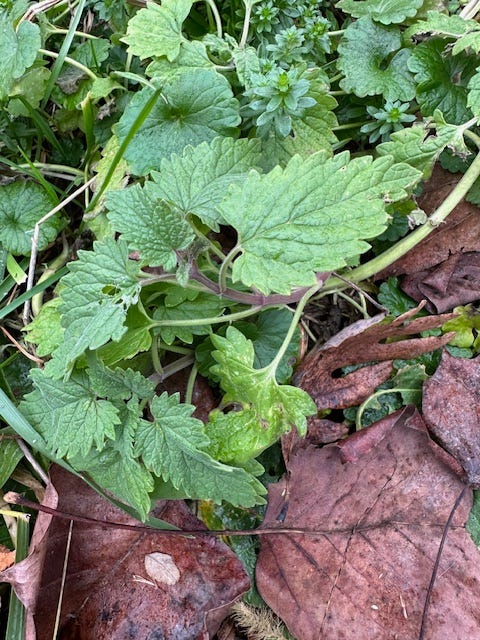
Purple dead nettle in the center below, isn’t very purple this time of year, but it’s milder, (less bitter) and you could enjoy a more of this fuzzy little weed in your greens mix at this time of year. There is bittercress and ground ivy with the grass, hiding in this mix too. The deep venation of the leaves and increased hair distinguish the baby, purple dead nettle at this stage of development. And gradually your nose will make you certain of this weed’s identity.
The scourge of winter and northerly climates was scurvy, a potentially fatal connective tissue disease that resulted from shortage of vitamin C. Dogs can make their own, but humans cannot, so we need to eat it. Remember that vitamin C can be found in pine needles and in rose hips, including wild roses, and invasive multiflora roses which have taken over in some areas. Notice the knobs on the ends of these fruits which each contain 2 light colored seeds. All the vitamin C is in the thin outer coating. I chew them up and spit out the seeds. This time of year the tiny fruits have become sweet, almost like cherries. In a month or so, desperate wildlife will have cleaned up these little things, but there is a good amount in the first half of winter here.
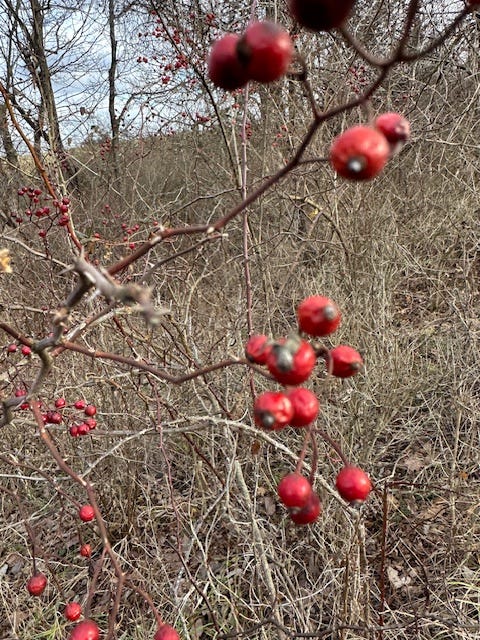
Yaaa, wild rose hips are teeny. But they taste great in the cold weather.
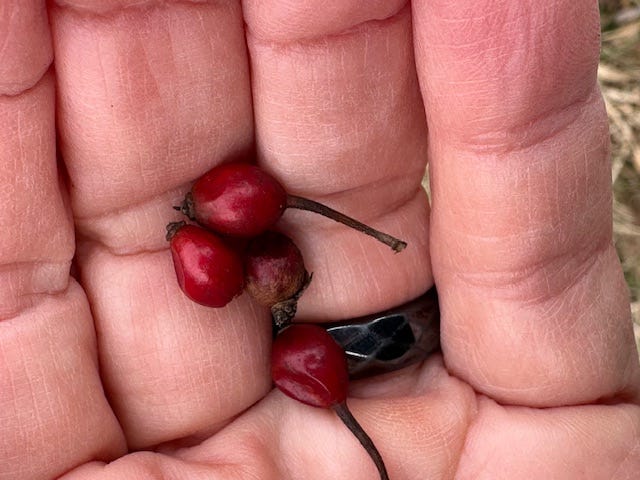
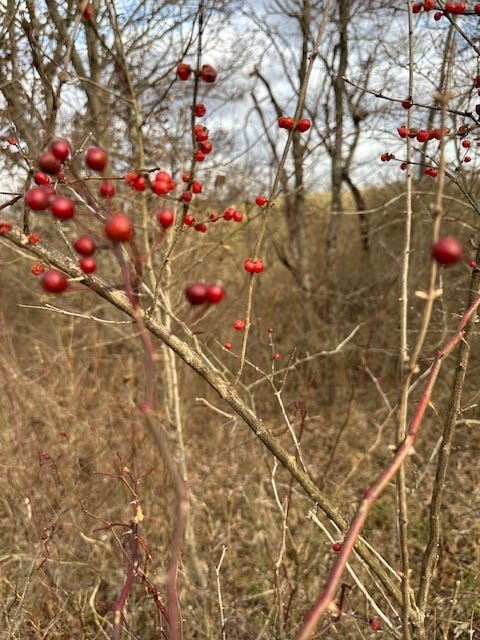
Be sure to distinguish the rose hips from the Asian imported honeysuckle berries. These honeysuckle bushes have taken over a lot of our land. It’s easy to tell the fruits apart, even though they’re about the same size and color. There is no prominent knob on the end of the honeysuckle berry, and the branch that bears them has NO thorns. Always pick your wild rose hips from a thorny branch!
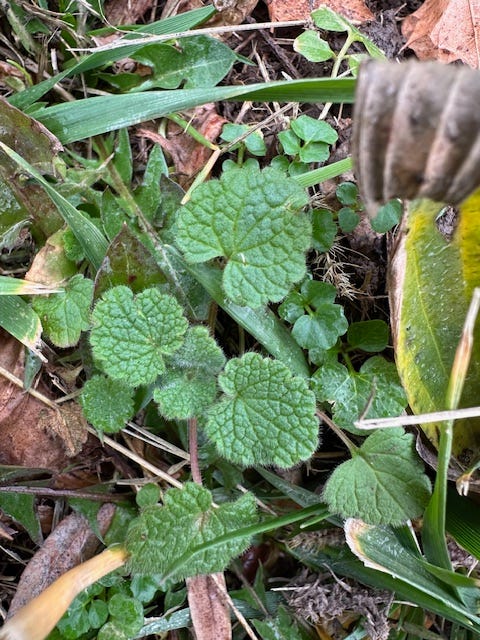
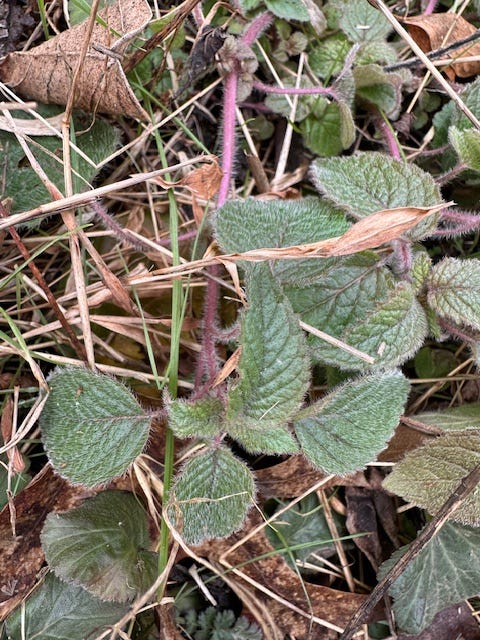
Your best weed buddy doesn’t know all of them, and here’s an example of one that keeps showing itself in the same spot every winter, on a north facing hillside of our Midwest, USDA zone 6, flyover U.S.A.. In my dreams, I’d get the genus and species name of this little wild mint. It’s a Mentha something or other, such as arvensis or canadensis or whatever hybrid. This little thing has plenty of hair on the stems and leaves and puts out a strong minty odor. Got any ideas? The mature plants get buried in vast underbrush every growing season so I have yet to see it flower. It’s been a faithful, cool weather friend.
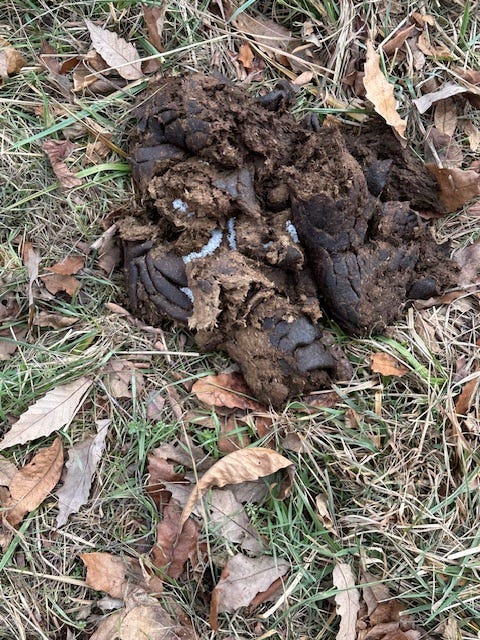
Last but not least on our winter tour of weedom is the fertilizer which makes the world go ‘round. The land needs both the plants and the animals to keep its cycles going.
And the chefs who produce the pies, are pictured below in their luxuriant winter coats. 😎
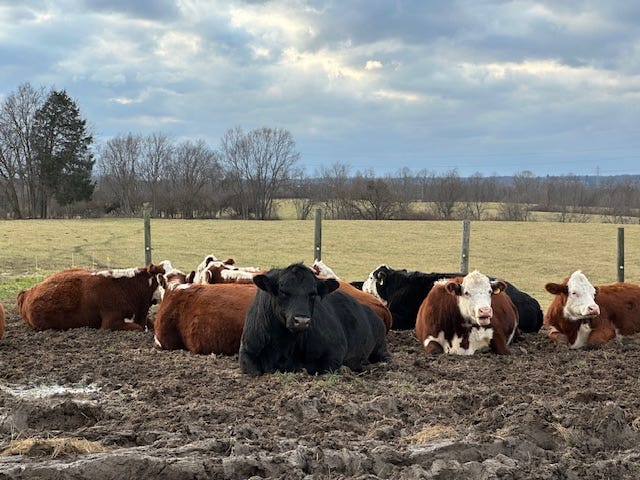
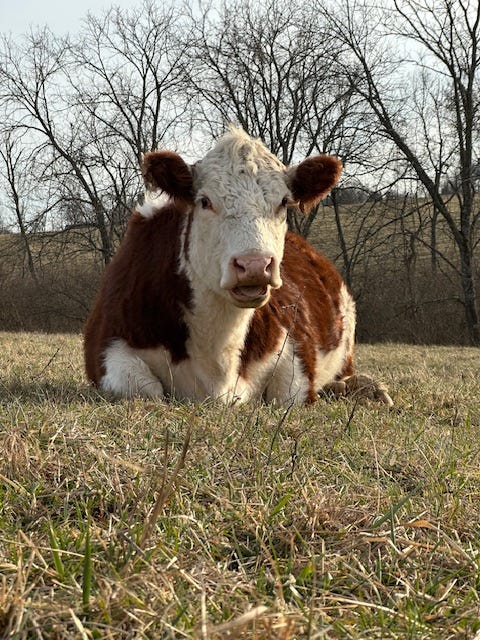
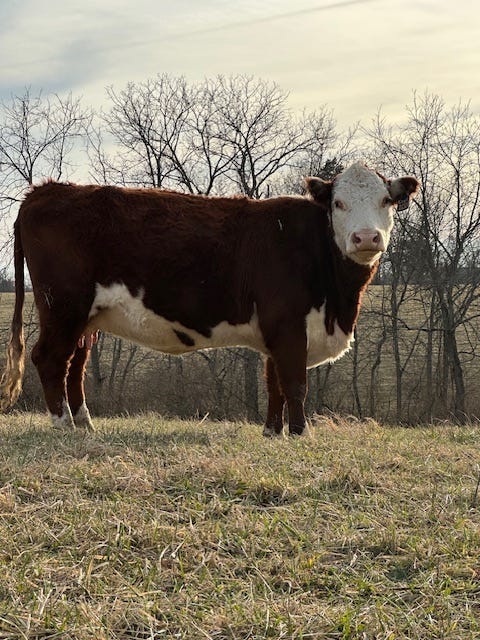
Hope you have enjoyed the winter tour of weedom, though the pics have extended length beyond what G-mail likes. The bovines are too excellent to leave out.
Let us all know the winter favorites that you encounter in your outdoor wanderings. The learning never stops. Thanks for hanging out with us, and be sure to dip into the open archives of weedom to enjoy what all the growing seasons will bring.