

Holy Basil

Whether you are Hindu or not, don’t be dissing the Tulsi. It’s important. Hundreds of millions of people can tell you about the sacred and beneficial values of this plant, but at weedom you get a little chemistry as a bonus.
Tulsi, the common name for holy basil, comes from Tulasi, an avatar or incarnation of the goddess Lakshmi, the wife of Vishnu. Tulasi is believed to grace planet earth within the form of this plant. The circumstances by which this came about, and the exact chronology vary among the tellings, but they contain much drama and transformations of Tulasi’s circumstances during battles between deities and demons. In extreme brevity, Tulasi is regarded as paragon of purity and holiness. The plant which bears her name is as sacred as it is medicinal, and is employed particularly in honoring Vishnu (preserver) a member of the Trimurti of Hindu deities which also includes Brahma (creator) and Shiva (destroyer).
The minty Ocimum members of family Laminaceae, now encompassed by the name Tulsi or Holy basil, contain natives of India and Africa as well as other parts of South Asia. There are three main species and a number of varieties to be addressed here, starting with those of uppermost repute.
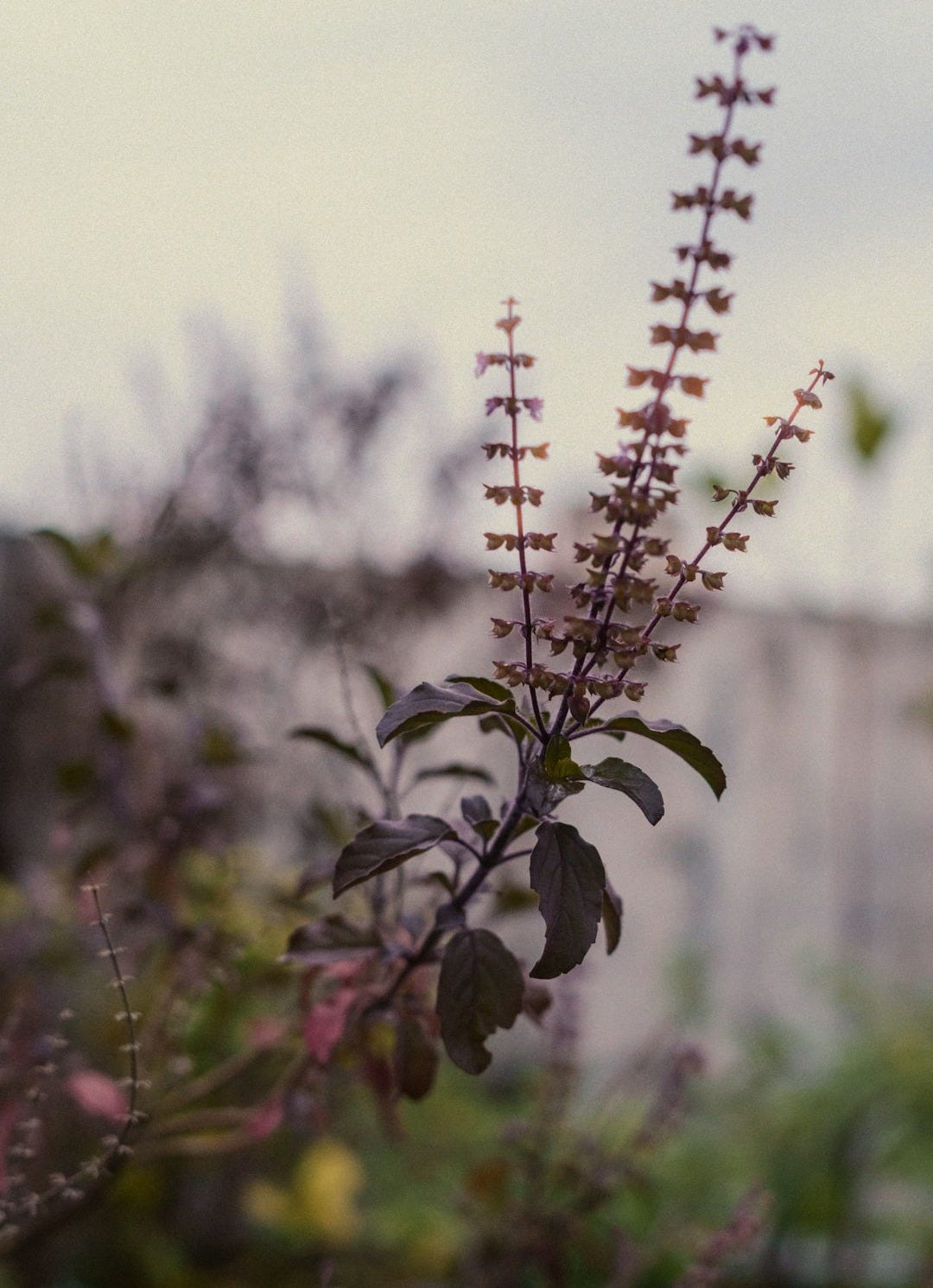
The holiest basils are cultivars of Ocimum tenuiflorum, seen in India, S.E. Asia, and E. Africa. Top among these is the purple stemmed and purple leafed and flowered Krishna Tulsi or Shyama Tulasi. It has been called “The Lord’s favorite”, and is associated with darkness and mystery. It’s cultivated for Temple usage and for medicinal use. If given enough sun the leaves become dark purple, but may be lighter or mottled if growing in the shade. This plant is regarded as potent and sharp, and for more acute medicinal use. It is used in Puja worship ceremonies to Vishnu, and to his Krishna incarnation, and to Lakshmi.
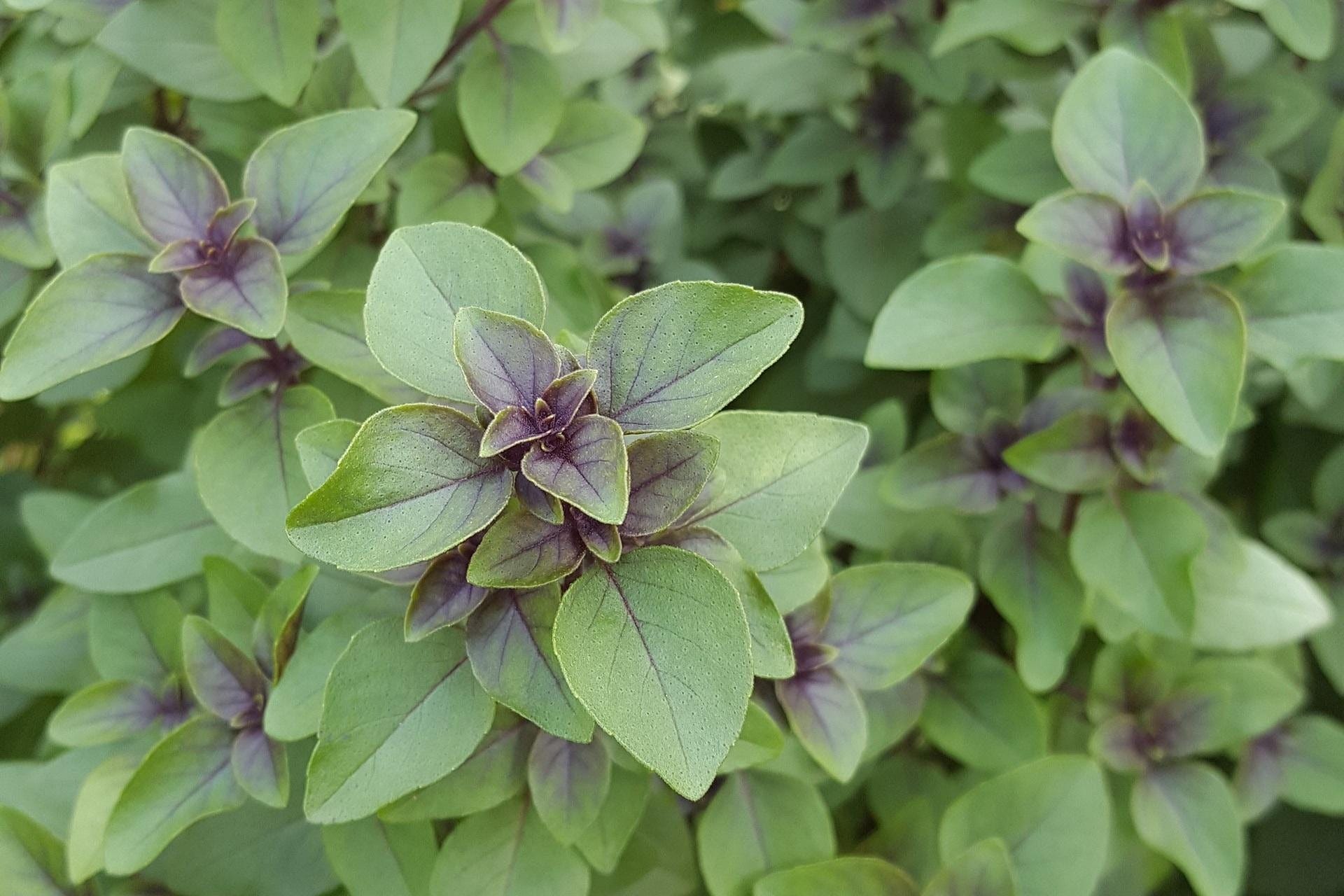
Another top cultivar is Rama Tulsi, or Shri Tulasi, a greener, milder plant with green to purple stems, purple flowers, and usually green leaves that might pick up a little purple. It is called the bright or royal Tulsi, signifying clarity and purity. It is seen in more household gardens and is applied more for domestic worship purposes, coming of age ceremonies. Medicinally it is used when a mellower effect is sought. It tends to be more for chronic and ‘adaptogenic’ application.
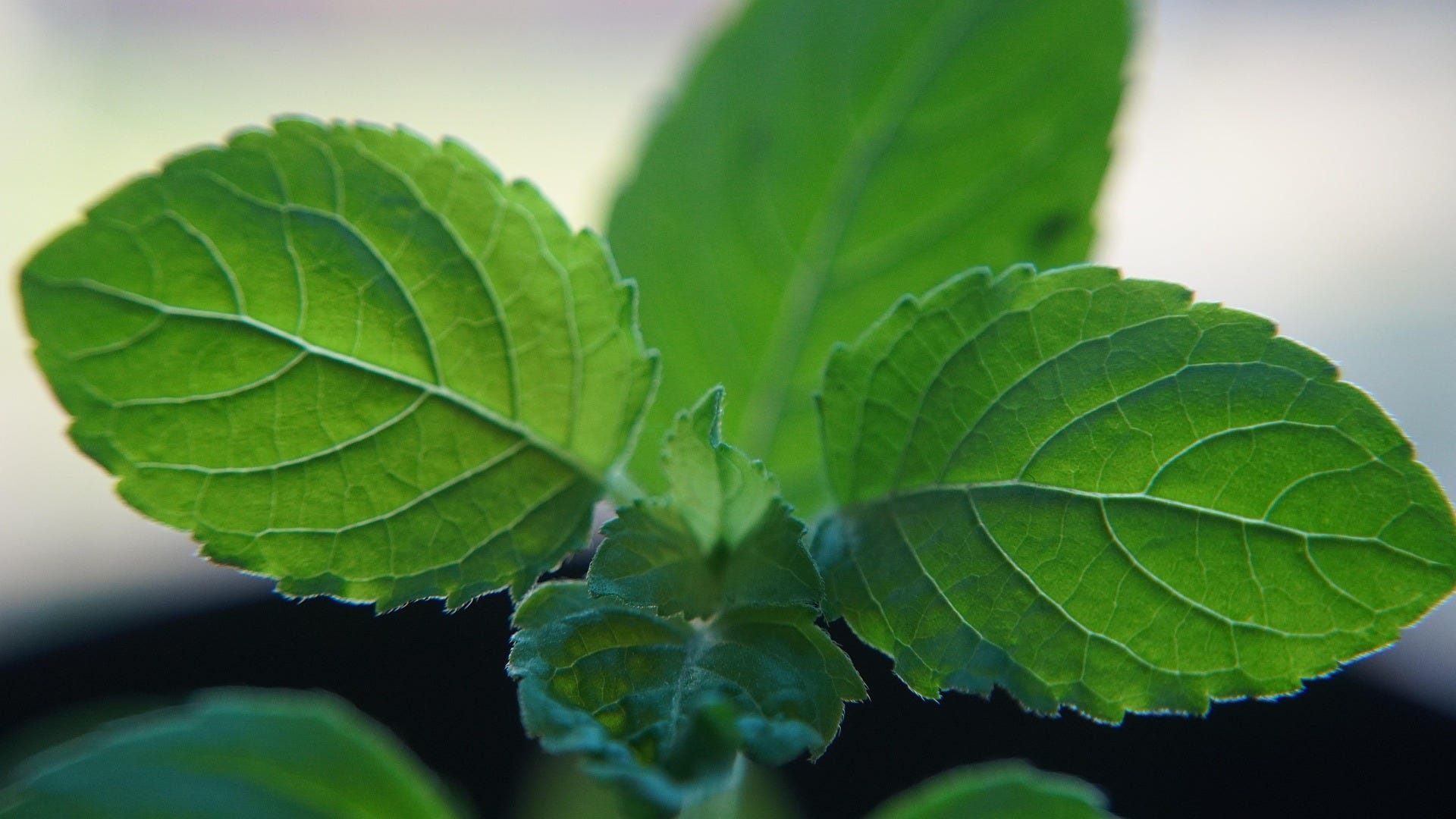
Amrita Tulsi is a type of green tulsi that might reach 4 feet high in the right location. It might be regarded as a more potent and vigorously hardy form of Rama tulsi. The name Amrita is comes from the Sanskrit word for immortality, which is fitting for this tenacious, subtropically perennial plant.
Vana Tulsi is a tall green plant which is actually a another species, Ocimum gratissimum. It has a very strong scent, green stems and leaves, and white flowers. It’s used mainly for medicinal purposes. The concentrations of main constituents differ considerably from O. tenuiflorum varieties.
It’s been determined that much of the ‘holy basil’ in frequent commerce throughout the U.S., called Kapoor Basil, is not a type of Ocimum tenuifolium. Tests of the “Kapoor” Tulsi apparently are matching those of Ocimum x africanum, so that recently a lot of seed renaming and catalog correcting has been going on. Here’s the scoop, as far as I can discern. Ocimum x africanum has that little x in the name because it’s a natural hybrid. The involved parent species are Ocimum basilicum and Ocimum americanum, which does not come from America. The latter species contains a lot of citral in its essential oil, and has a more citrusy flavor. The hybrids vary quite a bit in their essential oil chemistry, with some being fairly lime tasting, in Africa and North India, and others (containing more iso-eugenol) in Brazil and East Europe being more clove or camphor tasting. The hybrid, Ocimum x africanum has a variety of chemotypes, but in general it has a lighter flavor with more citrus overtones, than the other types of Tulsi. “Kapoor” itself is a word that evokes the camphor/eugenol range of flavors, and ethnobotanist, Richo Cech, it’s not an accurate name for this rather variable hybrid. He has been calling it “temperate tulsi”, because it grows well, and can reseed profusely in that kind of climate.
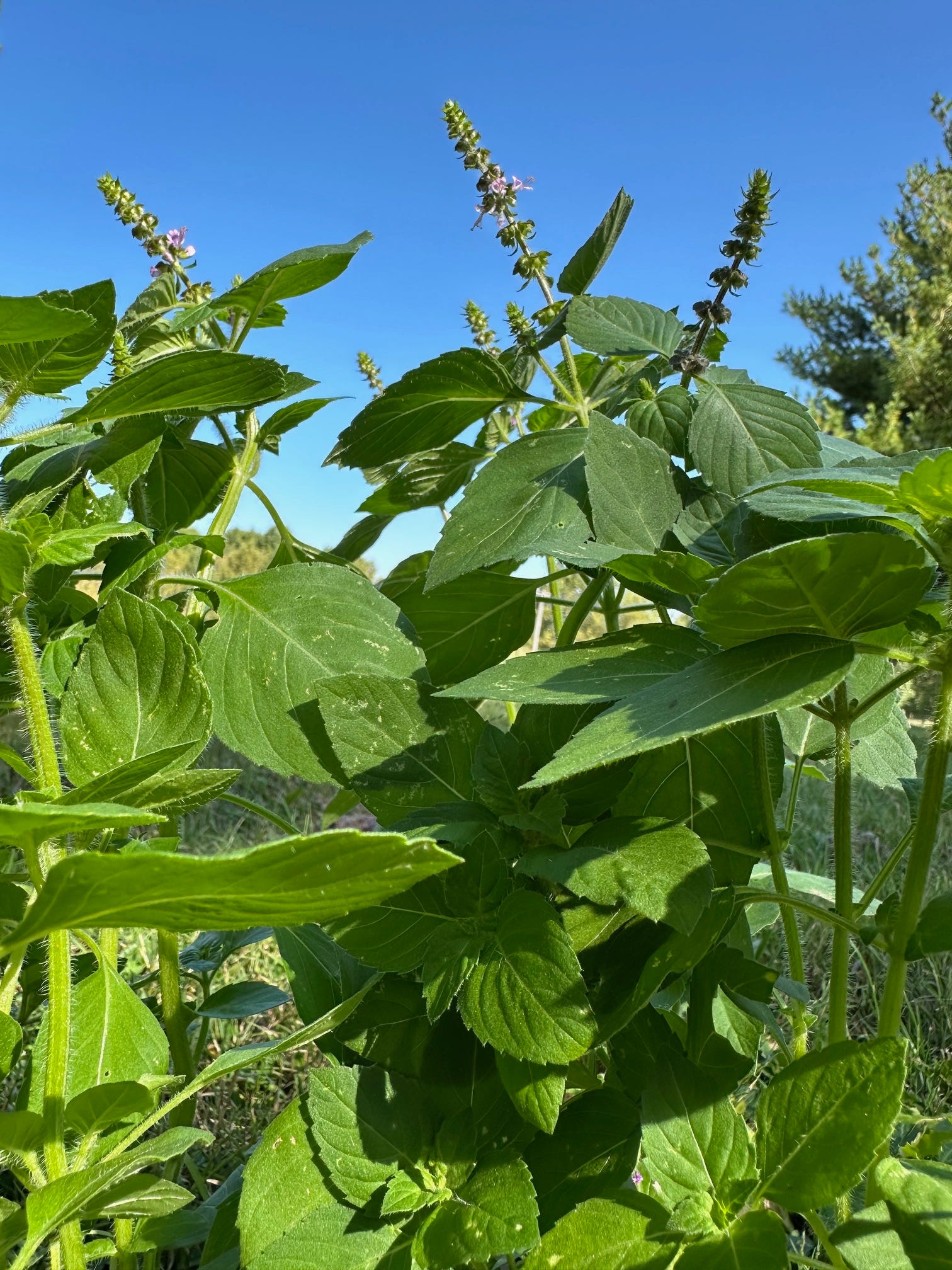
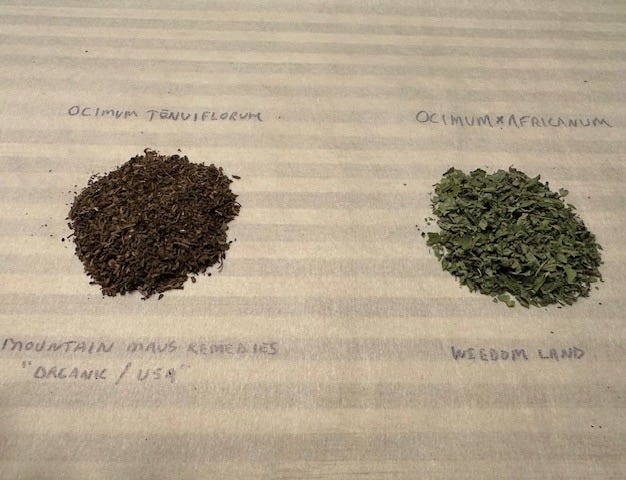
These volunteer plants pop up in late spring to early summer and are right at home at weedom. We find that the mild Ocimum x africanum germinates and grows easily here, though we have had the spicy, and more tropical Krishna and Rama types of Tulsi in our gardens too. (Unfortunately the only picture I could find of those plants is not very good. ) All varieties are annuals in this northernmost zone 6 climate though we successfully preserved some through the winter inside to be replanted in the spring, and experienced more woody growth habit in the second season.
In spite of what I have unearthed about the traditional applications of Tulsi, we will still see the Ocimum x africanum being marketed as Tulsi and as holy basil. However it’s a good plant, and is fine to use for many culinary and medicinal applications. Many of the tonic and the relaxing constituents are present in good quantity, and you can use this mild and easy to grow plant for flavor and for more regular medicinal use. Our specimens this past summer had a mild clove and spice flavor, the leaves made great tea, and I dried some for storage. Richo Cech, the likely source of this cultivar, had his own plants tested, and reported 0.74 mg eugenol, and 5.53 mg rosmarinic acid per gram of dried leaves.
Turning to the main constituents of these plants, we’ll finish off with the trends of relative quantities to expect in each kind of Tulsi. This might help you choose which cultivar to grow for particular reasons.
Tulsi is the everything plant. It contains generous amounts of powerful phytochemicals which are highlighted below. From brain, liver, and immune support to addressing infections, blood sugar issues, and pain, this plant “does it all”. And it tastes good.
Volatile oils:
Eugenol makes up 40-70 percent of O. tenuifolium oil, and is analgesic, antimicrobial, anti-inflammatory. The main source of clove like odor.
Beta- caryophyllene is an anti-inflammatory and neuroprotective sesquiterpene having non-psychoactive cannabinoid effects.
Elemene is a sesquiterpene well studied for antitumor effects
Methyl-eugenol gives a sharp clove like smell, but can be metabolized to a carcinogenic compound. It is a significant dose limiting compound of plants which also gives off the clove odor.
Iso-eugenol, like eugenol contributes to the clove like odor and is particularly found in some kinds of O. africanum.
Phenolics and Flavonoids
Rosmarinic Acid is a potent antioxidant, preservative, anti-inflammatory, neuroprotective compound.
Apigenin is a flavonoid with well studied anti-anxiety and anti-inflammatory effects.
Luteolin is very similar to apigenin but not as well absorbed from the G.I. tract. It helps to modulate immune responses, and shares much of apigenin’s utility, but it is not as available in the central nervous system.
Ursolic acid is a pentacyclic triterpene acid which is hepatoprotective, anti-diabetic and and anti-cancer. It’s also anti-fertility in large doses.
Oleanolic acid often accompanies ursolic acid in the plant world, and is likewise hepatoprotective, also anti-inflammatory.
Other Constituents
Beta-sitosterol supports immune function and management of cholesterol.
Alkaloids, Glycosides and Tannins are included in a vast array of less dominant secondary metabolites that contribute to the efficacy of the major, well studied constituents above.
When extracting Tulsi for its medicinal constituents, eugenol and ursolic acid have been commonly used as markers for assessing the potency and efficacy of the Ocimum tenuiflorum extracts. Rosmarinic acid is another useful marker.
The hepato-protective ursolic acid most notably has been shown to reduce number and swimming ability of sperm when given in food-like doses. There can always be too much of a good thing.
I asked my privately rented AI to produce a relative comparison of selected compounds within the 5 types of ‘holy basil’ including the ‘temperate Tulsi’. The result shown below is a sensible comparison from what I have seen, though I think the rosmarinic acid content of the temperate Tulsi is underrated with respect to the others. This chart should be be considered a generalization, since environments and plant chemotypes are variable. It does show the increased potency of the Amrita Tulsi, which has been selectively bred for increased production of medicinal compounds. It shows the differences of Vana Tulsi, O. gratissimum with its beta caryophyllene and the ‘temperate tulsi, O. x africanum which is mild in all regards. Note that the very similar compounds, apigenin and luteolin are combined.
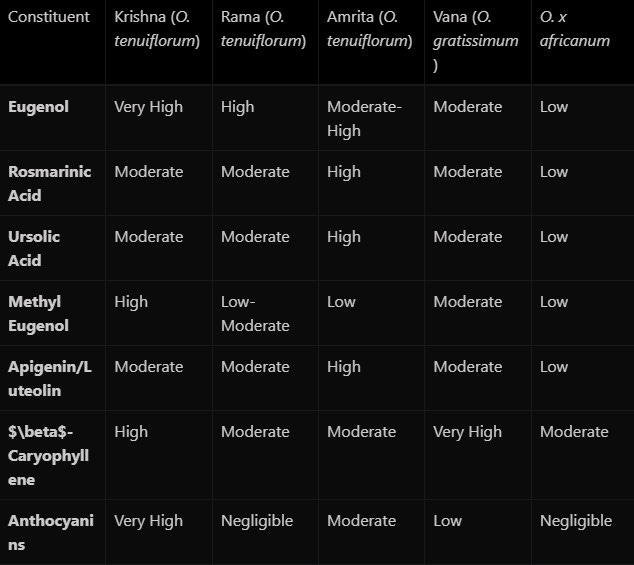
This generalized chart is useful in choosing the Tulsi that fits your priorities. Lower eugenol varieties will tend to be less warming. The milder ones become more food-like, particularly O. x africanum. Ours gives a fruity /clove scent which aids in balancing the flavors of less palatable herbal teas. Need to destress and relax? The Amrita could have enough apigenin and rosmarinic acid for you, while beta-caryophyllene rich Vana might be better to take the edge off of muscle and joint pain. Amrita and Krishna are probably best for acute conditions, while Vana and Rama and especially the O. x africanum are more suitable daily drivers. Amrita would be off the list for those who have fertility concerns, due to the ursolic acid content, but for liver support it would be prominent.
In Ayurvedic medicine, Tulsi qualities are pungent Katu, and bitter Tikta and has warming Ushna potency. Krishna Tulsi is more intense and is favored for respiratory ailments such as chronic bronchitis and severe infections of the throat. It’s added to medicinal formulas for clearing mucus congestion. Less warming than Krishna, Rama Tulsi is applied often for stress management and for metabolic health. Its milder character is more suited for daily use. It might be substituted for Krishna if a less harsh effect on the digestive system is needed. Rama is preferred for managing psychological stress and for immune support.
If you grow your own Tulsi, you will get to know its potency as you experience it. It’s completely worth doing if you want the top potency and flavor that a plant can deliver. Home grown looks better, especially fresh, and when dried in a darker airy room. Even our little O. x africanum smells and tastes terrific, fresh or dried. It’s good enough to garnish salad and fruit and it makes super tea. Extracting this plant into syrups and honey is becoming popular.
Be sure to weigh in with your Tulsi experiences and information. It would be great to hear from our readers with Ayurvedic knowledge, and from those who interact with Tulsi in their spiritual practices.
The spiritual interface with healing is an observable reality which has been called miracles, woo, placebo effect, or doctors-don’t-know-how-the-tumors-disappeared, for examples. Our Creator is behind these unexplainable occurrences, I’m convinced.
Readers weighing in will shape how I construct the next Tulsi post, and could very well prevent me from burying everyone in studies and chemical mechanisms :-D

People remember that weedom is fully open to all subscribers, both free and paid. Generous contributors are keeping the family in scrumptious coffee, (Community brand), extracted with carbon filtered tap water through a Bunn coffee maker. Thanks for keeping me awake, weed wandering, and helping people to connect with the free food and medicine. Anyone with and without $$ helps out by sharing weedom with friends and family, and this is much appreciated. Let me know if, in the present day, it makes more sense to put in a tip jar rather than depend on the subscription method for caffeinating myself and my people all the way to our hair ends. 😎
Where We Dig
1. Zhang X, Felter SP, Api AM, Joshi K, Selechnik D. A Cautionary tale for using read-across for cancer hazard classification: Case study of isoeugenol and methyl eugenol. Regulatory Toxicology and Pharmacology. 2022;136:105280. doi:10.1016/j.yrtph.2022.105280
2. Bhattarai K, Bhattarai R, Pandey RD, Paudel B, Bhattarai HD. A Comprehensive Review of the Phytochemical Constituents and Bioactivities of Ocimum tenuiflorum. ScientificWorldJournal. 2024;2024:8895039. doi:10.1155/2024/8895039
3. Cech R. Growing Plant Medicine. Vol 2. Herbal Reeds, LLC; 2024.
4. Groves MN. Holy Basil: The Zen Herb – Mother Earth Gardener. Accessed March 3, 2026. https://www.motherearthgardener.com/plant-profiles/holy-basil-plant-zm0z17szfis/
5. www.wisdomlib.org. On the method of worship of Tulasī Devī [Chapter 25]. May 15, 2013. Accessed March 4, 2026. https://www.wisdomlib.org/hinduism/book/devi-bhagavata-purana/d/doc57338.html
6. Malav, P, Pandey A, Bhatt K, Bisht I, Krishnan S. (PDF) Morphological variability in holy basil (Ocimum tenuiflorum L.) from India. Genetic Resources and Crop Evolution. 2015;62:1245-1256. doi:10.1007/s10722-015-0227-5
7. Nisar MF, Khadim M, Rafiq M, Chen J, Yang Y, Wan CC. Pharmacological Properties and Health Benefits of Eugenol: A Comprehensive Review. Oxid Med Cell Longev. 2021;2021:2497354. doi:10.1155/2021/2497354
8. Bhamra SK, Heinrich M, Johnson MRD, Howard C, Slater A. The Cultural and Commercial Value of Tulsi (Ocimum tenuiflorum L.): Multidisciplinary Approaches Focusing on Species Authentication. Plants (Basel). 2022;11(22):3160. doi:10.3390/plants11223160
9. Liu WN, Shi J, Fu Y, Zhao XH. The Stability and Activity Changes of Apigenin and Luteolin in Human Cervical Cancer Hela Cells in Response to Heat Treatment and Fe2+/Cu2+ Addition. Foods. 2019;8(8). doi:10.3390/foods8080346
10. Tulsi (Holy Basil) Type Comparisons. Richo’s Blog. April 19, 2017. Accessed March 3, 2026. https://blog.strictlymedicinalseeds.com/tulsi-holy-basil-type-comparisons/
Your writings are appreciated more than you can ever know.
I have recently acquired, while digging out from the recent snow, the dubious experience of dealing with sacroiliac troubles. The pain has been intense, and there is no position that I can find, to ease the pain while trying to sleep. I've just ordered up some Vana seeds, based on this information. Thank you!
I like to add tulsi leaves to my Thai curry dishes and I also use it in my topical salve as an anti microbial (antiseptic) agent.
Here is my recipe for the salve:
https://gavinmounsey.substack.com/p/sacredsevensalve?r=q2yay&utm_medium=ios